Which of the Following Is an Element of Art? Lines Color Texture All of the Above Brainly
1.6: What Are the Elements of Art and the Principles of Art?
- Page ID
- 46130
The visual art terms separate into the elements and principles of art. The elements of art are color, form, line, shape, space, and texture. The principles of fine art are scale, proportion, unity, variety, rhythm, mass, shape, space, balance, volume, perspective, and depth. In addition to the elements and principles of pattern, art materials include paint, clay, bronze, pastels, chalk, charcoal, ink, lightening, as some examples. This comprehensive list is for reference and explained in all the chapters. Understanding the art methods will help define and determine how the culture created the art and for what employ.
Over the years, fine art methods accept changed; for example, the acrylic paint used today is different from the cave art world-based paint used 30,000 years agone. People have evolved, discovering new products and procedures for extracting minerals from the earth to produce art products. From the rock age, the bronze, iron age, to the technology historic period, humans have e'er sought out new and better inventions. Yet, admission to materials is the most meaning advantage for change in civilizations. About every civilisation had access to clay and was able to manufacture vessels. However, if specific raw materials were only available in one area, the people might trade with others who wanted that resource. For example, on the ancient merchandise routes, Prc produced and candy the raw silk into stunning cloth, highly sought out past the Venetians in Italy to make clothing.
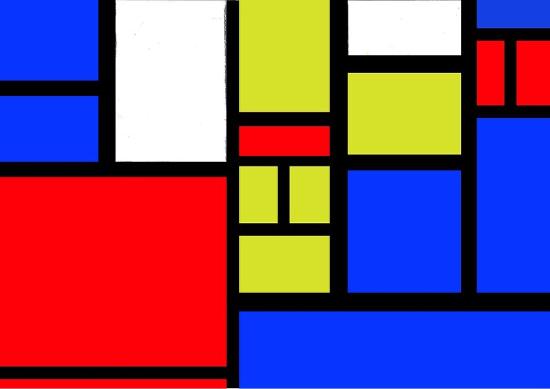
The fine art methods are considered the edifice blocks for any category of art. When an artist trains in the elements of fine art, they acquire to overlap the elements to create visual components in their fine art. Methods tin be used in isolation or combined into ane piece of art (ane.24), a combination of line and colour. Every piece of fine art has to contain at to the lowest degree 1 element of fine art, and most fine art pieces accept at least two or more.
Elements of Art
Colour: Color is the visual perception seen by the human centre. The modern colour cycle is designed to explain how color is arraigned and how colors interact with each other. In the middle of the color cycle, are the 3 primary colors: red, yellowish, and blue. The second circle is the secondary colors, which are the two principal colors mixed. Red and blue mixed together form purple, red, and yellow, course orange, and blue and yellow, create green. The outer circle is the tertiary colors, the mixture of a primary color with an adjacent secondary colour.
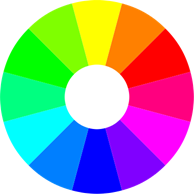
Color contains characteristics, including hue, value, and saturation. Master hues are also the principal colors: carmine, yellowish, and blueish. When two primary hues are mixed, they produce secondary hues, which are also the secondary colors: orange, violet, and light-green. When 2 colors are combined, they create secondary hues, creating additional secondary hues such equally xanthous-orange, red-violet, blue-light-green, blue-violet, yellowish-green, and carmine-orange.
Value: refers to how calculation black or white to color changes the shade of the original colour, for example, in (ane.26). The addition of blackness or white to one color creates a darker or lighter colour giving artists gradations of ane colour for shading or highlighting in a painting.
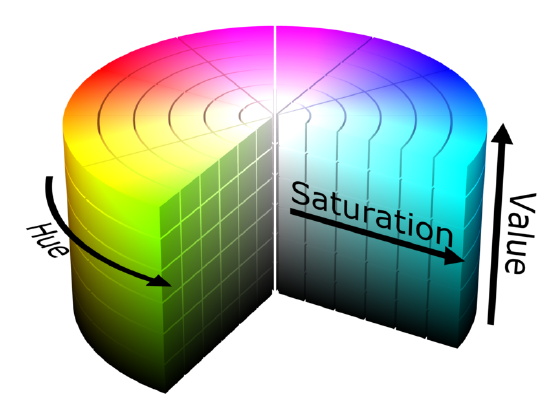
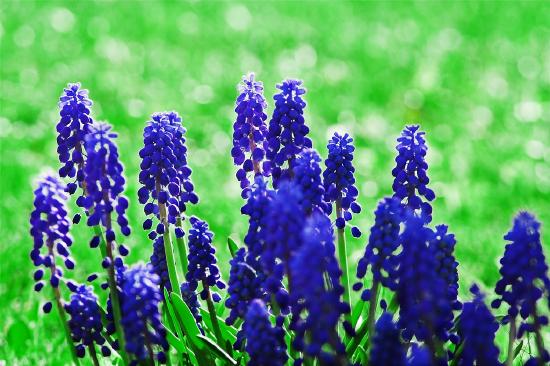
Saturation: the intensity of color, and when the color is fully saturated, the color is the purest form or most authentic version. The primary colors are the three fully saturated colors equally they are in the purest form. As the saturation decreases, the color begins to look washed out when white or black is added. When a color is bright, it is considered at its highest intensity.
Grade: Form gives shape to a piece of fine art, whether it is the constraints of a line in a painting or the edge of the sculpture. The shape tin be two-dimensional, three-dimensional restricted to height and weight, or it can be gratuitous-flowing. The form besides is the expression of all the formal elements of art in a slice of piece of work.
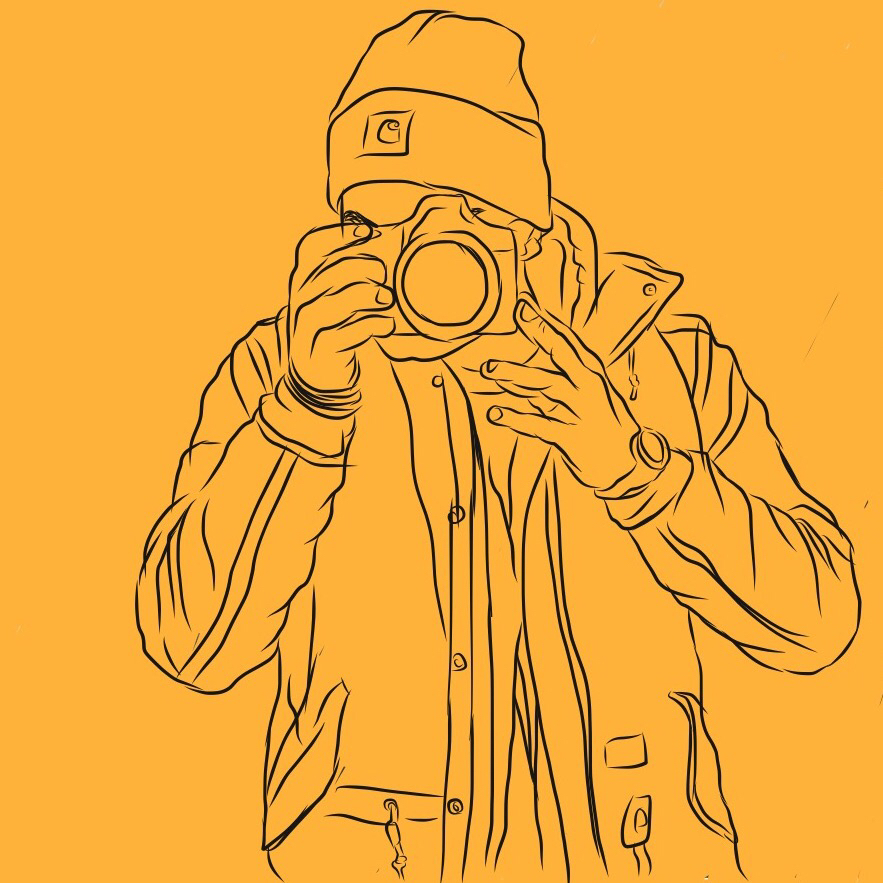
Line: A line in art is primarily a dot or serial of dots. The dots form a line, which can vary in thickness, color, and shape. A line is a two-dimensional shape unless the creative person gives it volume or mass. If an artist uses multiple lines, it develops into a cartoon more recognizable than a line creating a form resembling the exterior of its shape. Lines can also be implied equally in an action of the hand pointing upwardly, the viewer'south optics continue upward without fifty-fifty a existent line.
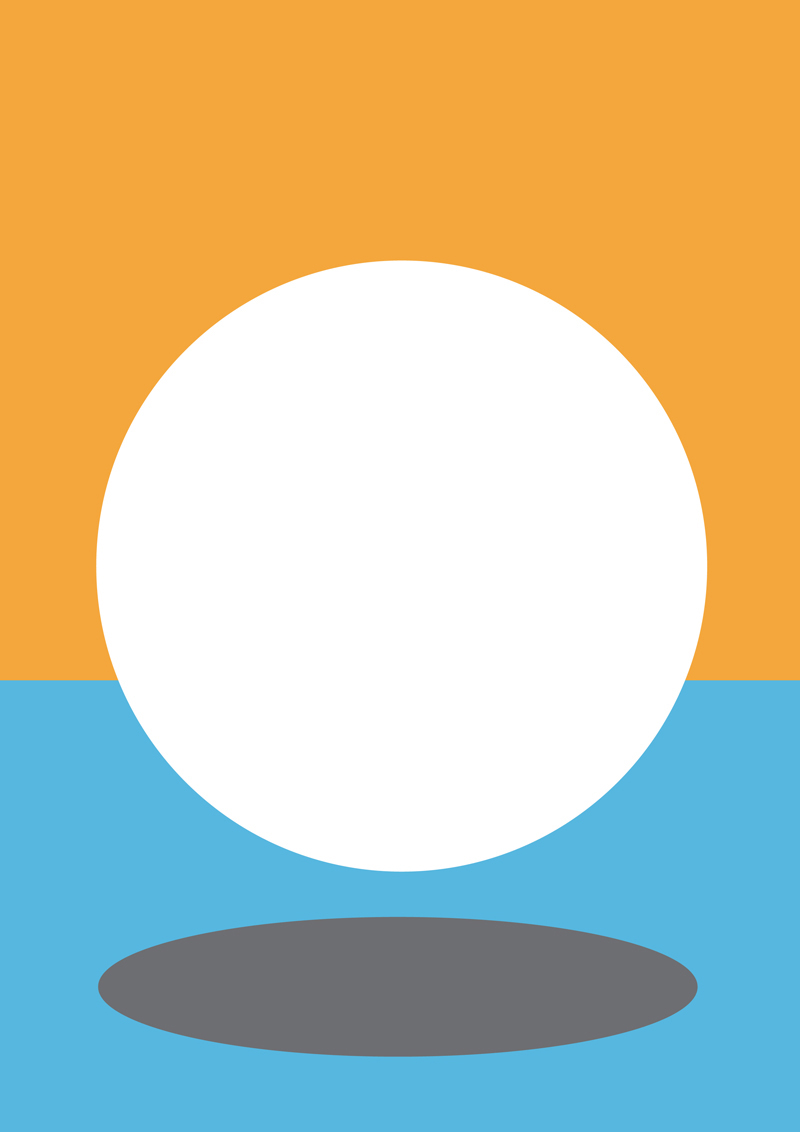
Shape: The shape of the artwork tin have many meanings. The shape is divers as having some sort of outline or purlieus, whether the shape is two or three dimensional. The shape tin exist geometric (known shape) or organic (free form shape). Space and shape go together in almost artworks.
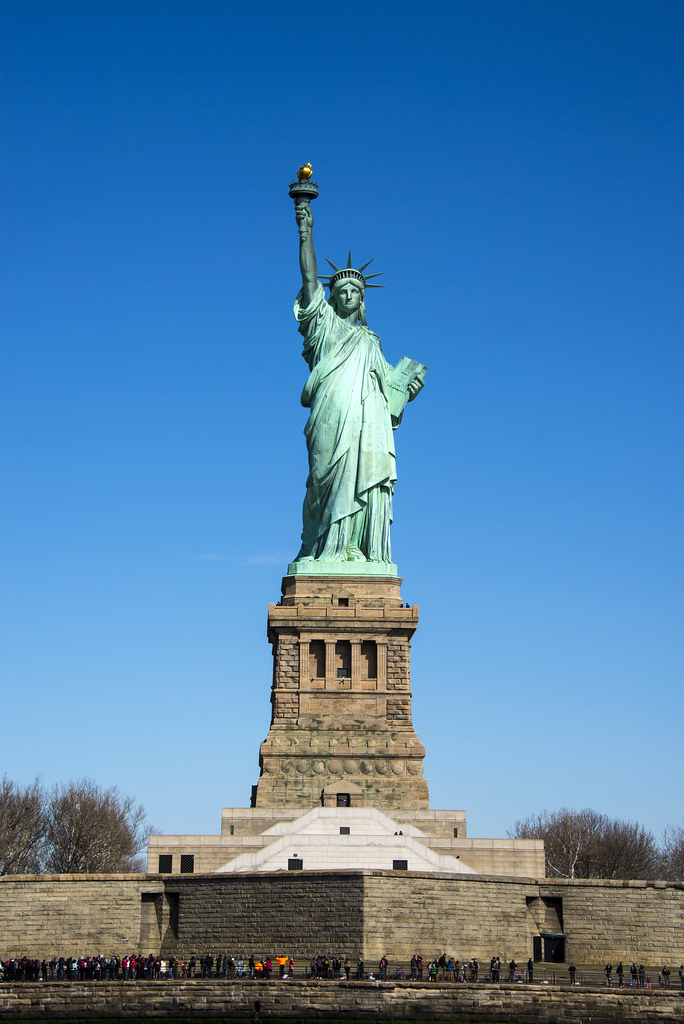
Space: Infinite is the area effectually the focal point of the art piece and might be positive or negative, shallow or deep, open, or closed. Infinite is the area around the art form; in the example of a building, it is the surface area behind, over, within, or next to the structure. The infinite around a structure or other artwork gives the object its shape. The children are spread beyond the pic, creating space between each of them, the figures become unique.
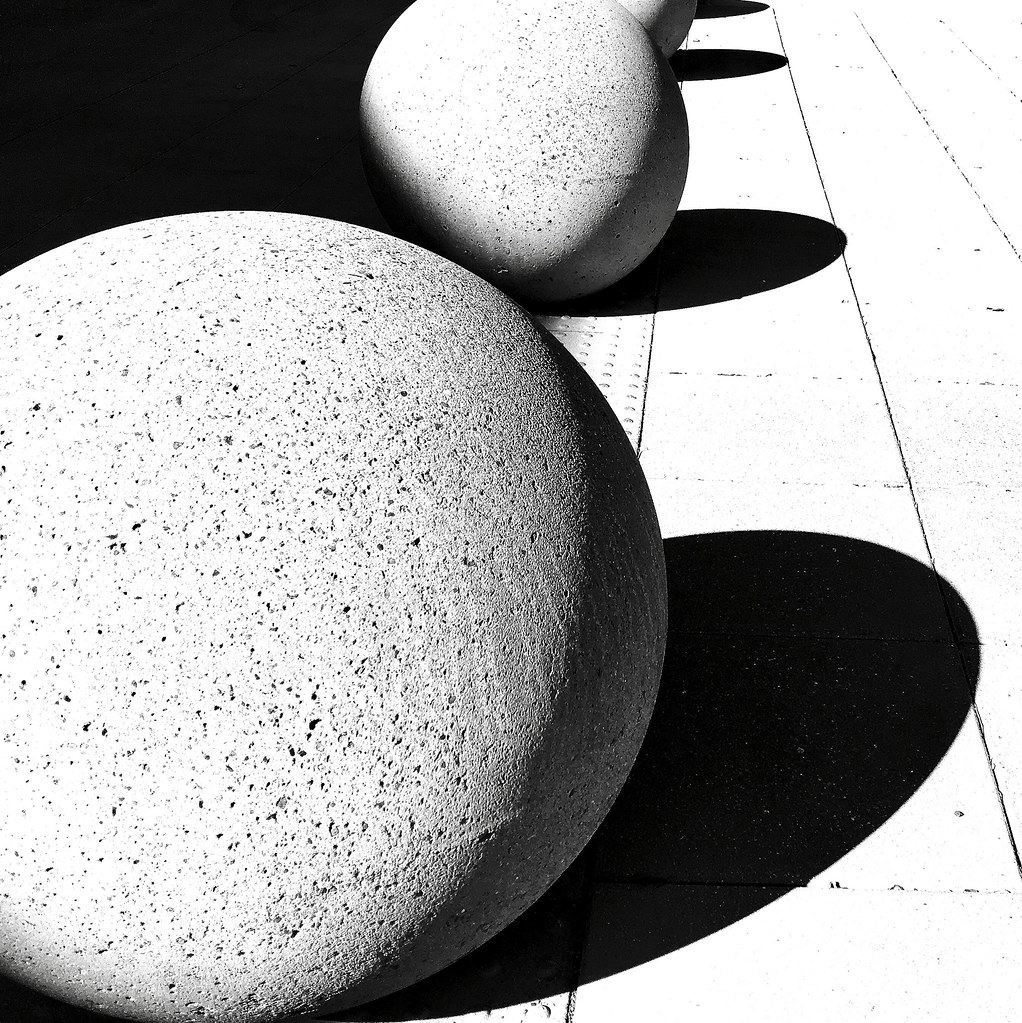
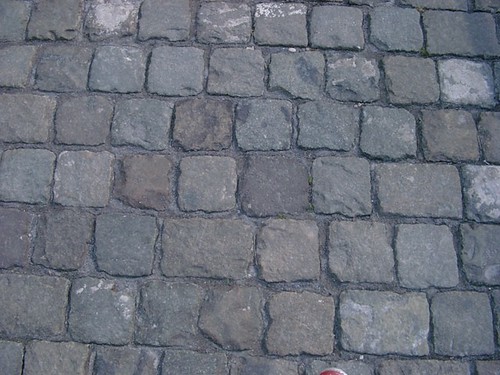
Texture: Texture can exist crude or smoothen to the bear upon, imitating a item feel or sensation. The texture is also how your eye perceives a surface, whether it is flat with little texture or displays variations on the surface, imitating rock, woods, rock, fabric. Artists added texture to buildings, landscapes, and portraits with fantabulous brushwork and layers of paint, giving the illusion of reality.
Principles of Art
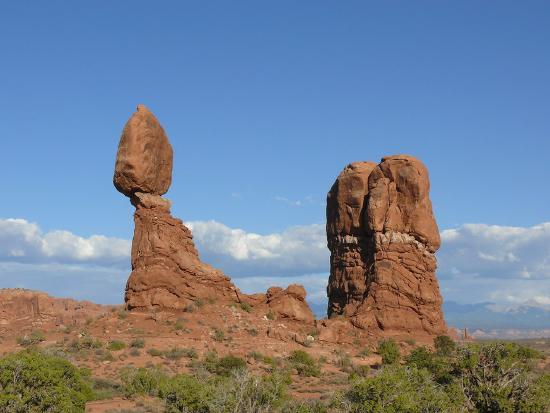
Balance: The residuum in a piece of art refers to the distribution of weight or the credible weight of the slice. Arches are built for structural blueprint and to hold the roof in place, allowing for passage of people below the arch and creating residue visually and structurally. Information technology may be the illusion of art that can create residual.
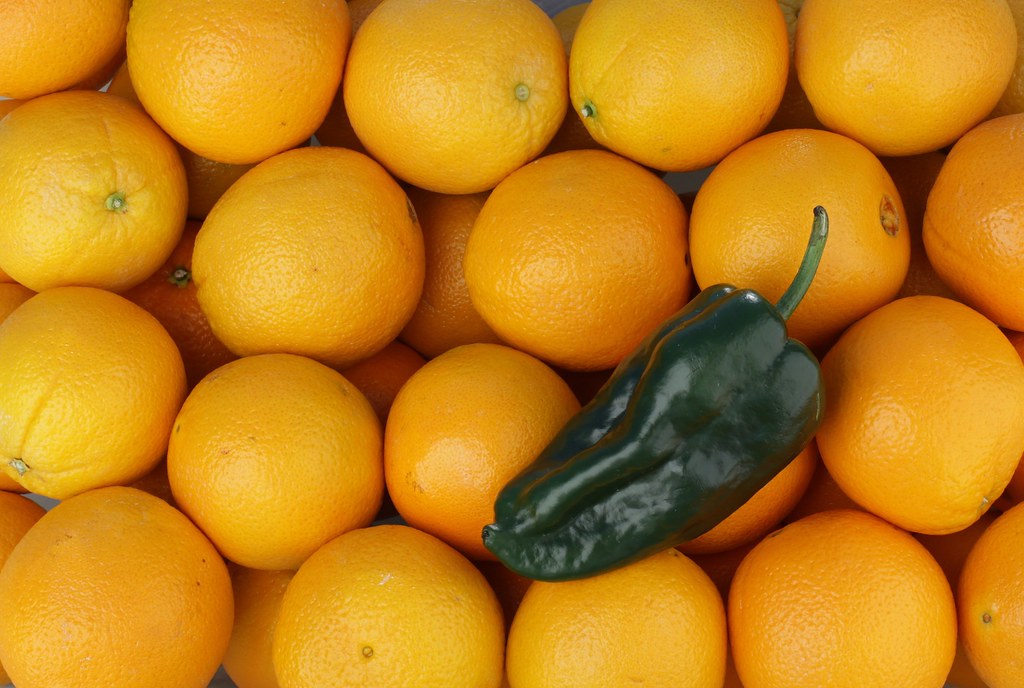
Contrast: Contrast is divers as the deviation in colors to create a piece of visual art. For case, black and white is a known stark contrast and brings vitality to a piece of art, or information technology can ruin the art with too much contrast. Contrast can too be subtle when using monochromatic colors, giving diversity and unity the final slice of art.
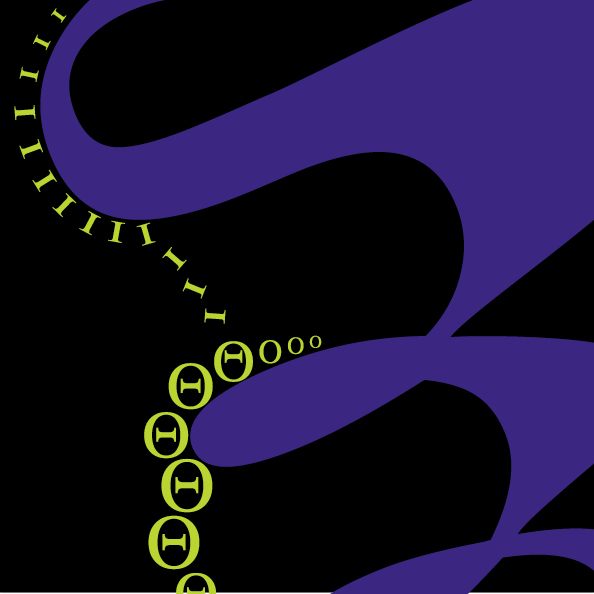
Emphasis: Accent can be color, unity, rest, or whatever other principle or element of art used to create a focal point. Artists volition use emphasis like placing a cord of gold in a field of dark purple. The color contrast between the gold and nighttime purple causes the gold lettering to popular out, becoming the focal point.
Rhythm/Movement: Rhythm in a piece of fine art denotes a type of repetition used to either demonstrate movement or expanse. For example, in a painting of waves crashing, a viewer will automatically encounter the movement as the moving ridge finishes. The use of bold and directional brushwork will also provide move in a painting.
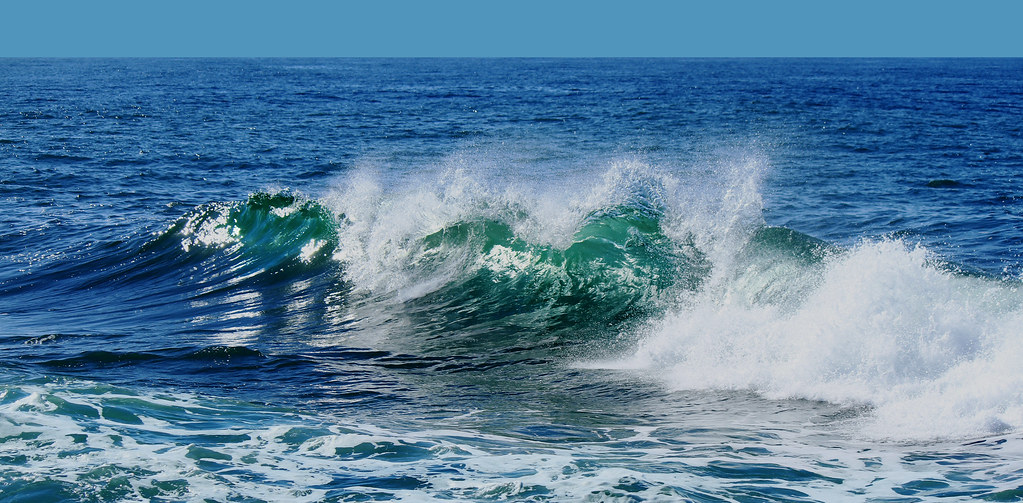
Proportion/Calibration: Proportion is the human relationship between items in a painting, for example, betwixt the sky and mountains. If the sky is more than two-thirds of the painting, it looks out of proportion. The scale in fine art is similar to proportion, and if something is non to scale, it tin wait odd. If there is a person in the flick and their hands are likewise large for their body, then it volition expect out of scale. Artists can also use scale and proportion to exaggerate people or landscapes to their reward.
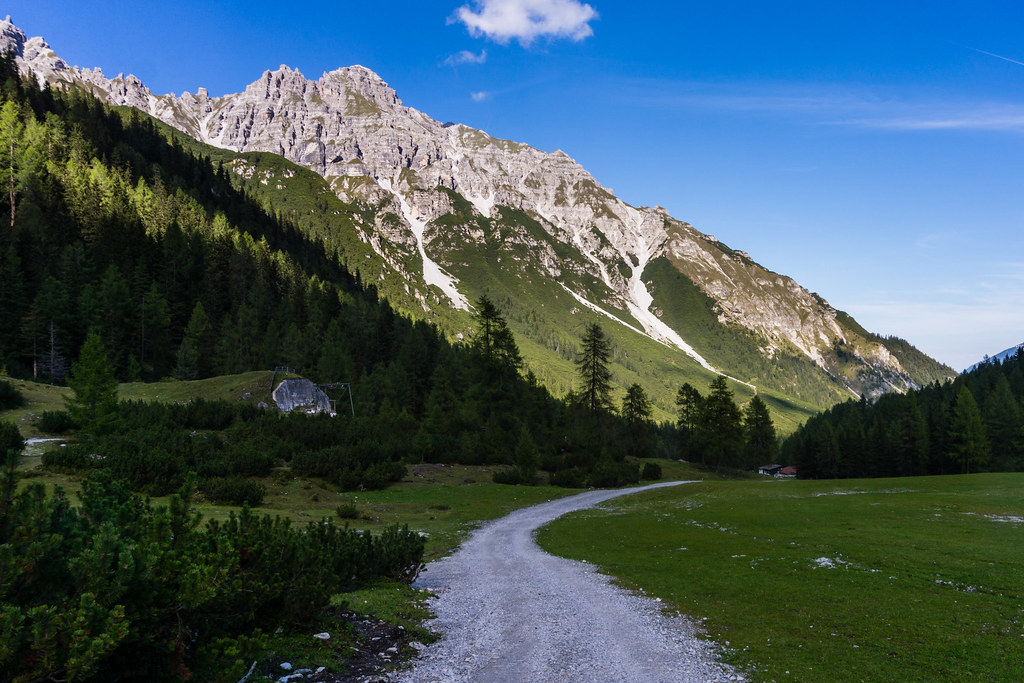
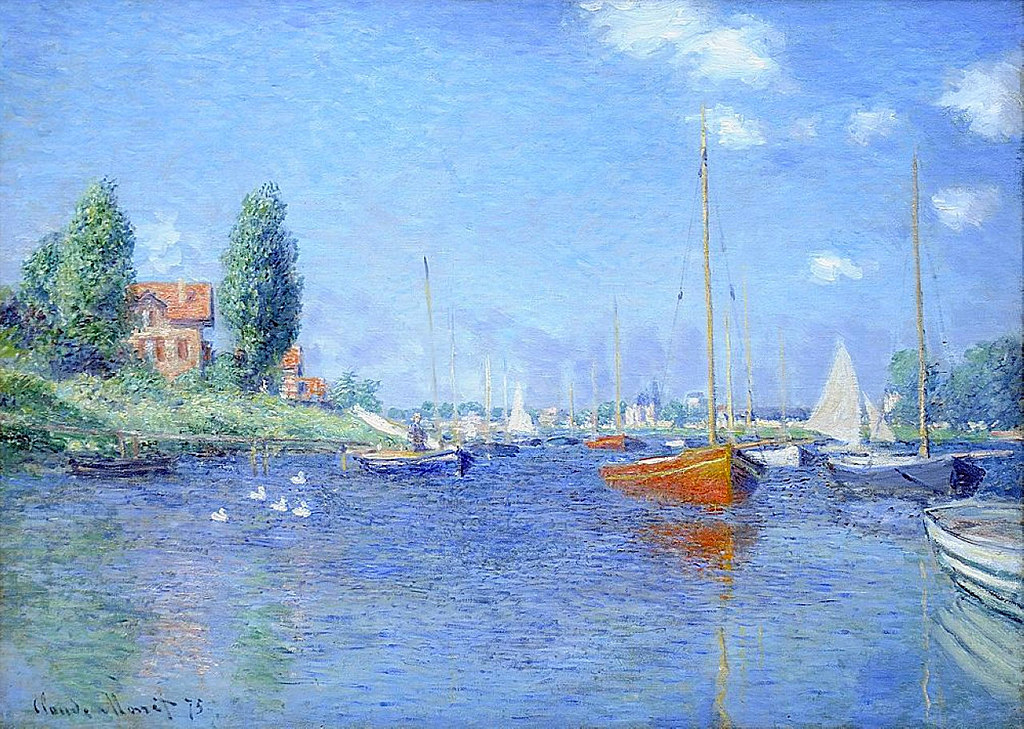
Unity and variety: In art, unity conveys a sense of completeness, pleasure when viewing the art, and cohesiveness to the fine art, and how the patterns work together brings unity to the picture or object. Every bit the contrary of unity, variety should provoke changes and awareness in the art slice. Colors tin can provide unity when they are in the same color groups, and a splash of red can provide variety.
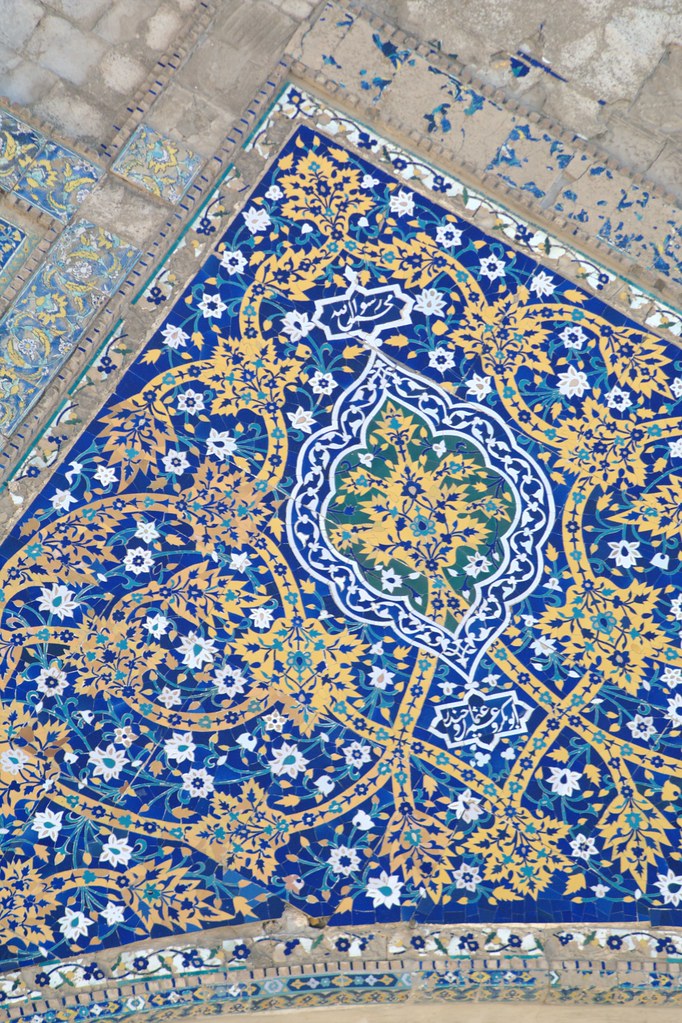
Pattern: Design is the mode something is organized and repeated in its shape or form and tin flow without much structure in some random repetition. Patterns might co-operative out like to flowers on a plant or course spirals and circles as a grouping of soap bubbling or seem irregular in the cracked, dry mud. All works of fine art take some sort of pattern even though information technology may be difficult to discern; the blueprint volition form by the colors, the illustrations, the shape, or numerous other fine art methods.
Source: https://human.libretexts.org/Bookshelves/Art/A_World_Perspective_of_Art_Appreciation_%28Gustlin_and_Gustlin%29/01:_A_World_Perspective_of_Art_Appreciation/1.06:_What_Are_the_Elements_of_Art_and_the_Principles_of_Art
0 Response to "Which of the Following Is an Element of Art? Lines Color Texture All of the Above Brainly"
Post a Comment